


3 Ways to Merge the Character of a Period Home with a Contemporary Extension | Studio Mayfield
- sarahconnerdesign
- Dec 1, 2025
- 3 min read
Many homeowners with period properties face similar challenges when planning a contemporary extension. Seamlessly blending a new addition with the existing property in a way that feels considered and cohesive can be tricky. Open-plan kitchens or living areas can feel disconnected from the rest of the house, or the new space may lack warmth and character. Getting the balance right between contemporary design and historic features can feel overwhelming.
A current project we’re working on is a Georgian townhouse in Bath, where the clients are demolishing and rebuilding a 1950s extension. They want the new interior to feel modern and fresh whilst respecting the home’s high ceilings, sash windows, and original fireplaces. By carefully planning the materials, finishes and colour, and drawing inspiration from traditional English design with a modern twist, we are creating a space that flows naturally from the original rooms. The extension will feel like a thoughtful continuation of the home rather than an afterthought.
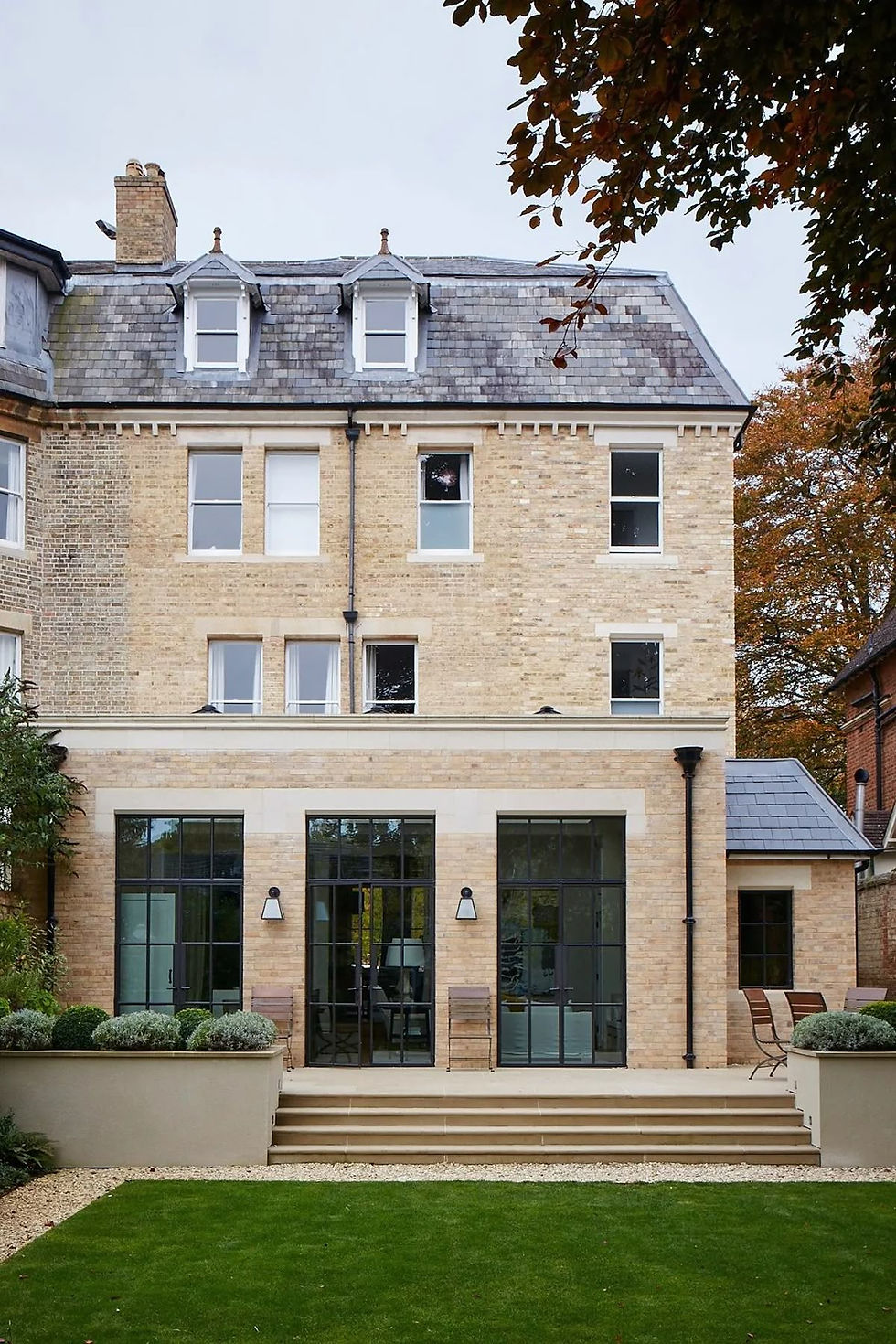
Contemporary extension on a period home. Image credit Pinterest.
1. Let Original Interior Features Guide the Design
I always start by looking closely at the period features that give a home its character, skirting, cornicing, fireplaces, and ceiling heights. These features provide cues for colour, materials, and layout in the new extension.
Subtle gestures, like echoing proportions in joinery or the kitchen, help the new space feel connected to the existing rooms without copy and pasting a traditional style that will feel incongruous with the contemporary extension.

Use the proportions or symmetry of the existing building and mirror them in the interior for the new extension. Image credit Pinterest.
2. Choose Materials, Finishes, and Colours That Complement the Home
Material choices play a huge role in creating cohesion between old and new interiors. I focus on tactile, natural finishes such as timber, plaster, muted stone, and warm metals like brass, then balance these with sleeker contemporary surfaces. Keeping the flooring consistent and a using considered colour palette help guide movement through the space and visually link the new extension to the period rooms. When colours flow harmoniously from one room to the next, the whole home feels more connected. Using complementary materials and tones ensures the contemporary extension feels grounded in the property’s historic character whilst still feeling fresh and modern.

Choose natural and tactile materials to bring the old and new together. Image credit Studio Mayfield.
3. Bridge Period Character with Modern Interiors
A slim shaker kitchen is a perfect example of how to bridge the gap between modern and classic, its panelled design nods to a home’s traditional character, whilst the slimmer proportions give it a contemporary feel. Pairing this with vintage pieces or traditional fittings creates a seamless blend of period charm and modern functionality.

A skinny shaker kitchen is the perfect bridge between old and new interior styles. Image Credit Pinterest.
Creating Interiors That Enhance Your Period Home
Designing an interior for a contemporary extension in a period home is about understanding the character of the existing space and balancing contemporary elements that complement it.
At Studio Mayfield, I work with homeowners across Bath, Bristol, and Somerset to create interiors that feel natural, functional, and honour the original property. Every choice, from materials and finishes to furniture, lighting, and colour is made with both history and modern living in mind.
Book a Discovery Call today to explore how your contemporary interior extension can feel like a cohesive part of your period home, blending style, comfort, and character.

Stripes are another great bridge between the old and new as they mimic traditional lines in architecture whilst still feeling fresh and modern. Image credit Studio Mayfield.


Comments