


How much does a renovation cost for a period home in Bath or Bristol?
- sarahconnerdesign
- May 11
- 4 min read
A client came to me the other week asking a question I hear all the time.
“How much is it actually going to cost to renovate my Georgian townhouse in Bath?”
It is such a good question, but also one that rarely has a simple answer.
When you are working with a period property, especially in heritage-rich areas like Bath or Bristol, the truth is that the cost to renovate a period home is shaped by so many moving parts. It is never just about square metres or finishes, but about the building itself, its history, and the level of change you want to make.
So I thought I would break it down properly here, so you can start to understand what is realistic before you even begin.

Image: Master bedroom in the eaves of a period cottage mid-renovation. Credit: Pinterest
Why period home renovation costs vary so much
One of the first things I always explain is that no two period homes are the same.
Even two Georgian townhouses on the same street in Bath can have completely different budgets once you start digging into them.
This is usually because of:
The condition of the property
How much original fabric is being retained
Whether layouts are changing
Hidden structural or service issues
The level of finish you want to achieve
Period homes rarely behave in a “standard” way, which is why costs can shift quite quickly once work begins.
Typical renovation costs for period homes
To give you a rough guide, here is how I usually frame it for clients:
Light renovation
£500–£1,000 per m²Cosmetic updates, decorating, flooring, lighting changes.
Mid-level renovation
£1,000–£2,000 per m²New kitchen or bathroom, rewiring, plumbing updates, some layout adjustments.
Full renovation or structural work
£2,000–£4,000+ per m²Reconfiguration, extensions, high-end bespoke finishes, full refurbishment.
Most of my clients fall somewhere in the mid to high range, especially when they want to modernise a period home without losing its character.
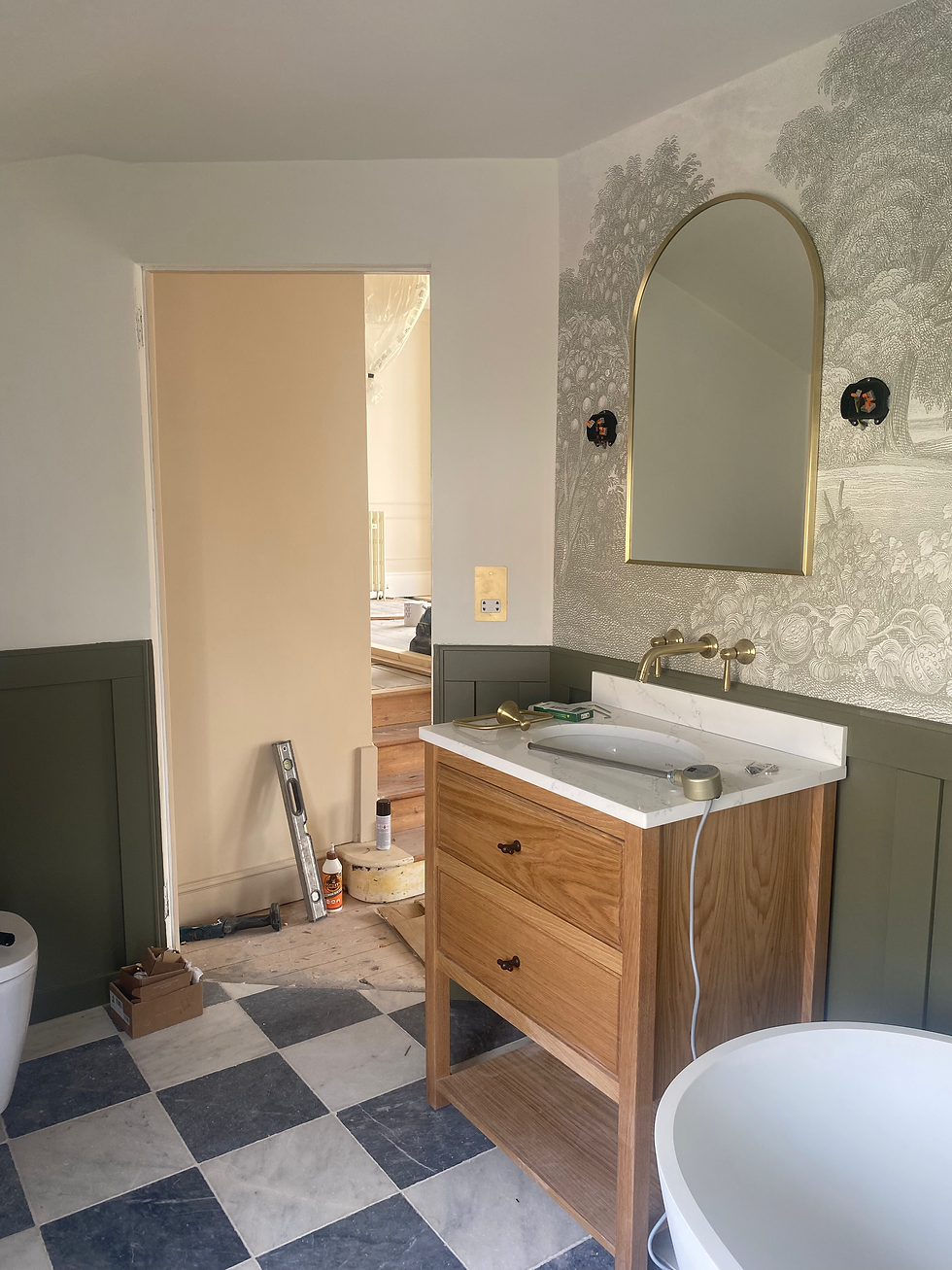
Image: Master Ensuite in a Georgian Grade II listed property close to completion. Credit: Studio Mayfield
A recent project example
Recently, I worked with a client who had just bought a Grade II listed property in Bath. She was excited about transforming her new home but felt completely unsure about what a realistic renovation budget would look like.
Her main concern was balancing respect for the original features with a more modern, practical layout for family life.
We started by mapping out the scope properly, room by room, rather than jumping straight into finishes or aesthetics. What became clear quite quickly was that the biggest costs were not cosmetic at all, but in reworking the layout and upgrading the infrastructure of the house.
Once we had a clear design direction, she was able to prioritise investment in the kitchen and main living spaces, while phasing other areas for later. This gave her control over the budget without compromising the overall vision.
What she initially thought might be a vague, unpredictable renovation became a structured, considered plan she could move forward with confidently.

Image: Master Ensuite in a Georgian Grade II listed property at strip-out stage. Credit: Studio Mayfield
The costs people do not always see coming
This is where things can get a little tricky.
With period homes, especially Georgian and Victorian properties, there are often hidden costs that only appear once work begins.
Things like:
Damp or timber repairs
Electrical and plumbing upgrades
Hidden structural adjustments
Planning or listed building requirements
I usually advise allowing at least 15–25% contingency on top of your budget. Not because things will definitely go wrong, but because period homes are rarely fully predictable until you open them up.
What actually drives your budget
When I am working with clients, I find the biggest budget drivers are:
How far we are changing the layout
The quality of finishes chosen
The level of bespoke design involved
The condition of the existing property
Any heritage or conservation restrictions
A simple refresh and a full reconfiguration of a Georgian townhouse are two completely different financial projects.

Image: Detail of a bespoke kitchen in a period home. Credit: Pinterest
Why clarity at the start matters so much
Most of the stress I see comes from not knowing what is realistic.
People start with inspiration, which is exciting, but without grounding that in budget and structure, it quickly becomes overwhelming.
This is why I always bring clients back to three things early on:
What is actually possible within budget
What will make the biggest impact
What can be phased if needed
Once that is clear, everything else becomes much easier to decide.
Final thoughts
Renovating a period home is a significant investment, but it is also one of the most rewarding things you can do when it is approached in the right way.
If you’re based in Bath, Bristol, Somerset or the Cotswolds and you’re starting to think about your own project but feel unsure about what things might cost or where to begin, that uncertainty is completely normal. Most of the clients I work with come to me at exactly this stage, when they know they want to do something but need clarity before making any big decisions.
That is often where early design input makes the biggest difference. Getting the right foundations in place at the start can save you time, stress and costly changes later on and help you feel confident about every step that follows.
If you would like support with your renovation, you can book a Discovery Call. We will talk through your home, your ideas and what is realistically possible, so you can move forward with clarity and direction.


Comments